
Trevor Paglen, 2026 LG Guggenheim Award Recipient
LG Guggenheim Award
L G G u g g e n h e i m A w a r d
The multi-year initiative establishes the LG Guggenheim Award, the flagship program of the LG Guggenheim Art and Technology Initiative, which recognizes one artist annually for their groundbreaking achievements in technology-based art. Administered by
the Solomon R. Guggenheim Foundation, the award is juried by an international panel of distinguished museum directors, curators, scholars, and other arts professionals, with the selected artist receiving an unrestricted honorarium of $100,000.
Guggenheim New York and LG proudly announce Trevor Paglen as the 2026 LG Guggenheim Award recipient. Past recipients of the LG Guggenheim Award are Stephanie Dinkins, Shu Lea Chang, and Ayoung Kim. One additional artist will be recognized with
the LG Guggenheim Award through 2027.
2026 Award Recipient
2026 Award Recipient, Trevor Paglen
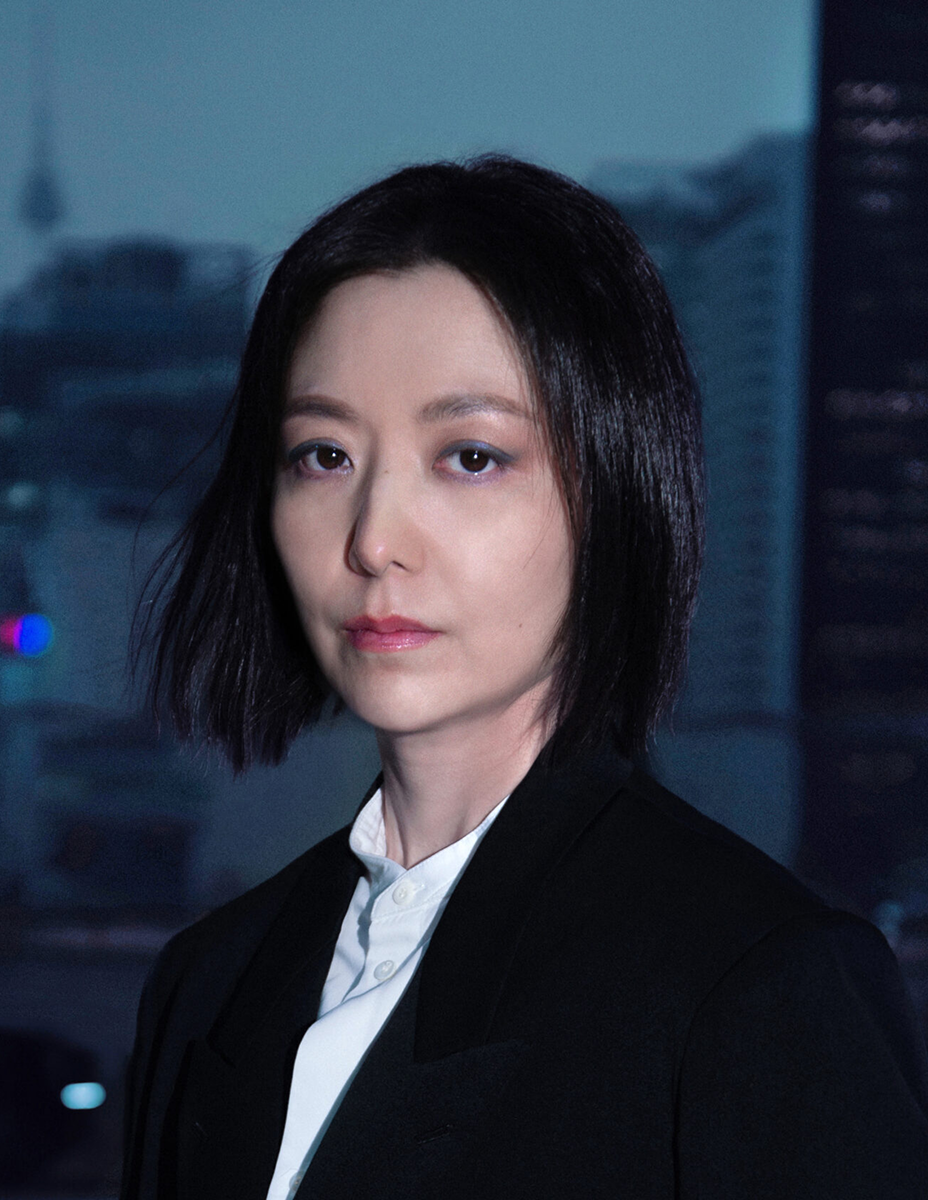
Trevor Paglen's practice spans photography, simulation, remote sensing, sculpture, writing, research, and engineering, all aimed at uncovering systems that often operate out of sight.
Paglen brings visibility to digitally invisible structures, helping us better understand present technologies and their underlying logic. Drawing on sustained engagements with landscape-renderings, advanced technology, and the history of photography, he reveals how power, secrecy, and surveillance influence what we see and what we overlook through digital systems. Paglen’s work is preoccupied with the formation and construction of digital images, examining alternate, evolving machinic apparatus of digitally constructed images. Paglen explores how these forms shape our understanding of reality.
In recognition of his work, Paglen received the MacArthur Fellowship in 2017 and the Electronic Frontier Foundation’s Pioneer Award in 2014, honoring him as a groundbreaking investigative artist.
Since being honored with the 2018 Nam June Paik Prize, Paglen held solo exhibitions in Korea at the Nam June Paik Art Center in 2019 and at Pace Gallery Seoul in 2022. Paglen has consistently shaped contemporary discourse on technology through various collaborations with Korean art institutions and global artists. In 2024, he participated in an exhibition at the National Museum of Modern and Contemporary Art (MMCA), Cheongju, exploring the social and cultural impact of AI. The exhibition included works by Ayoung Kim, the 2025 LG Guggenheim Award recipient. His previous engagements also extend to a 2020 exhibition at the de Young Museum in San Francisco with inaugural award recipient Stephanie Dinkins, and a presentation at the 2018 Gwangju Biennale alongside Shu Lea Cheang and Ayoung Kim, further highlighting the intricate relationship between technology and humanity.
Major Works
Jury
"Paglen examines the power structures surrounding mass technologies and the exchanges they facilitate.
With the emergence of large language models and contemporary AI systems, Paglen’s practice has expanded to engage deeply with
advanced data analytics, computer vision, and the underlying architectures that shape our modes of perception.
This unwavering devotion to critical inquiry and public accountability merits recognition and support."
- Excerpt from the Jury’s comments
Physical Award
In conceptualizing the physical award, we drew inspiration from digital zero and one — the elemental foundation of information science and computing. Just as this profoundly simple construct made possible technological wonders such as augmented reality and artificial intelligence, in this design the digits "1" and "0" are captured in midst of active interaction, anticipating new and unexpected artforms that digital technology can bring to the art of the Future.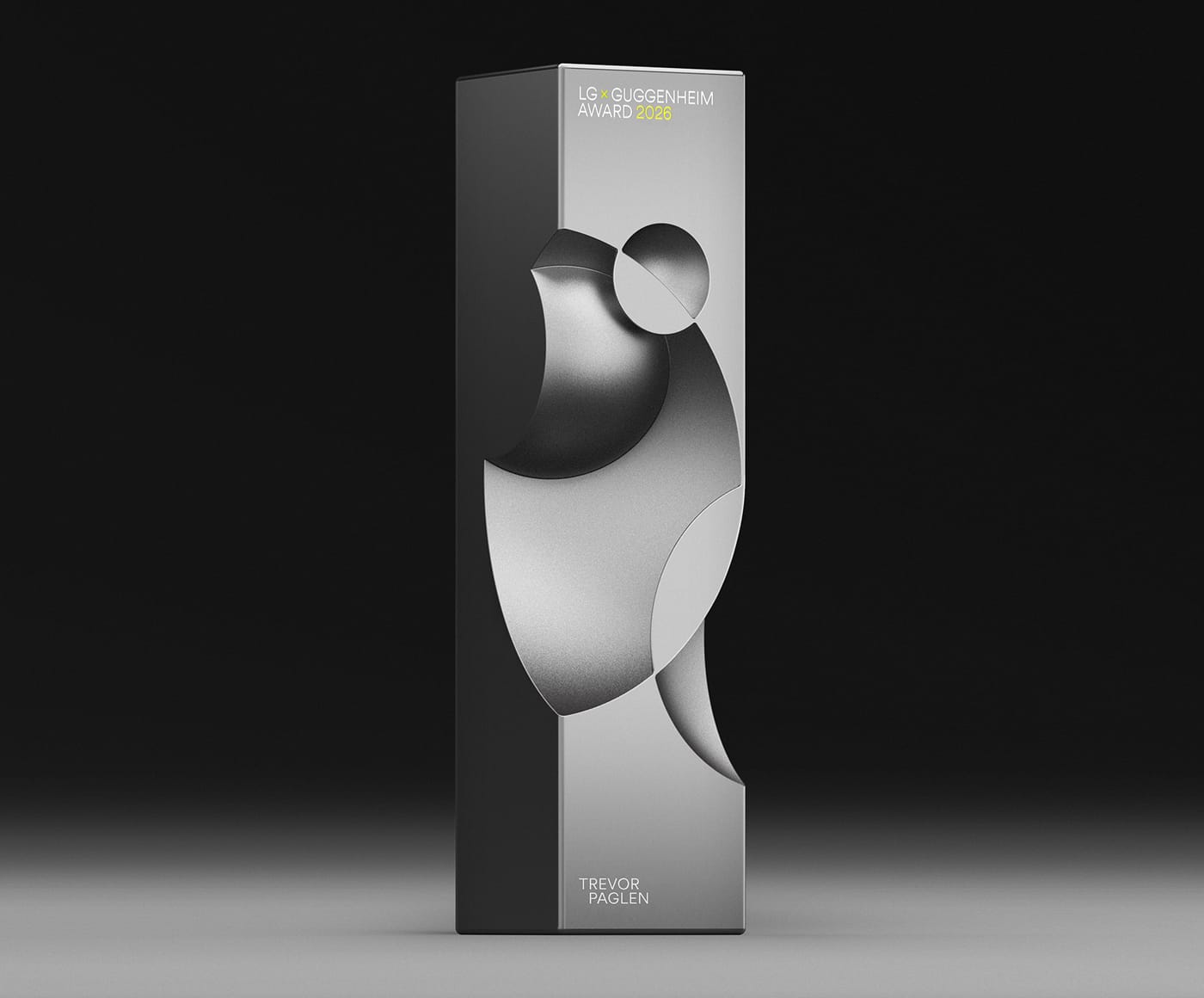 LG Guggenheim Award, Physical Award © SWNA
Initiative
The LG Guggenheim Art and Technology Initiative is a five-year, multifaceted collaboration designed to research, honor, and promote artists working at the intersection of art and technology. Unique in its areas of concentration and approach, the initiative is an unprecedented investment in technology as an artistic medium. It will enable the Guggenheim to broaden its investigations into this innovative field, providing essential support to the visionary artists who inspire new understandings of how technology shapes, and is shaped by, society. Through a sustained Global Partnership in support of the Solomon R. Guggenheim Museum and Foundation, LG aims to help usher in a new wave of digital creativity, combining cutting-edge solutions with the unmatched artistic sensibilities of the Guggenheim.
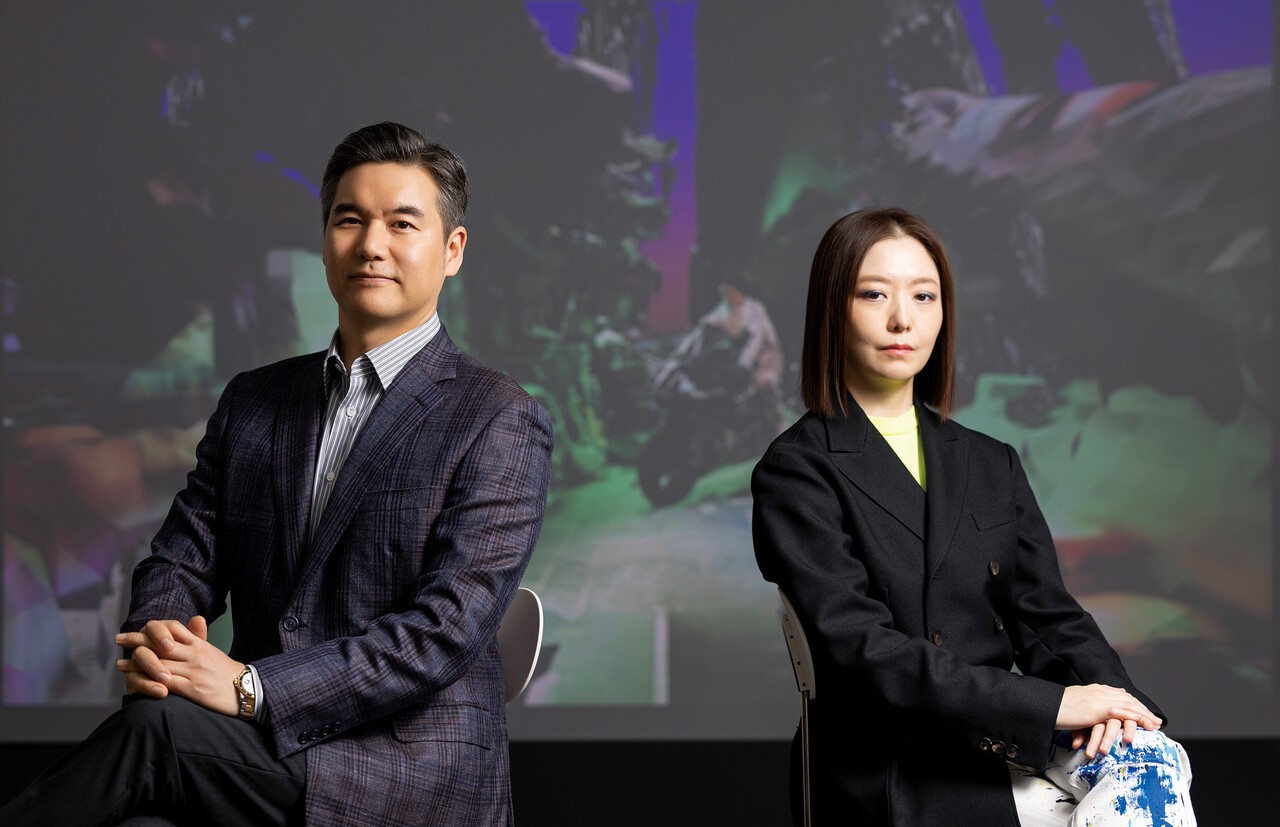
A Storyteller Bridging Art and Technology
Ayoung Kim is one of the most prominent media artists of our time, known for her storytelling that fluidly traverses the boundaries of art and technology, history and futurism. In March, she became the first Korean recipient of the prestigious LG Guggenheim Award, and in 2023, she received the Golden Nica, the highest honor awarded by Prix Ars Electronica, the world’s largest media art festival.
Her works—interweaving video, sound, text, and performance—go beyond exploring the interaction between technology and humanity, offering profound artistic interpretations of the complex socio-political realities of contemporary society. From shedding light on the 19th-century Geomundo Incident to examining the tragic consequences of how the British horse racing industry was introduced into Korea, Kim weaves historical facts with current issues to craft narratives of deep philosophical resonance.
"As artists, we dive deep into ourselves, hit bottom, endure pain, and wrestle with our inner lives. The language and aesthetics that emerge from that experience are what move and connect with people," Kim reflects. With her recent accolades, Kim is poised to continue shaping the global discourse around digital and tech-driven art, standing at the forefront of a rapidly evolving artistic frontier.
Ayoung Kim’s Technophilia
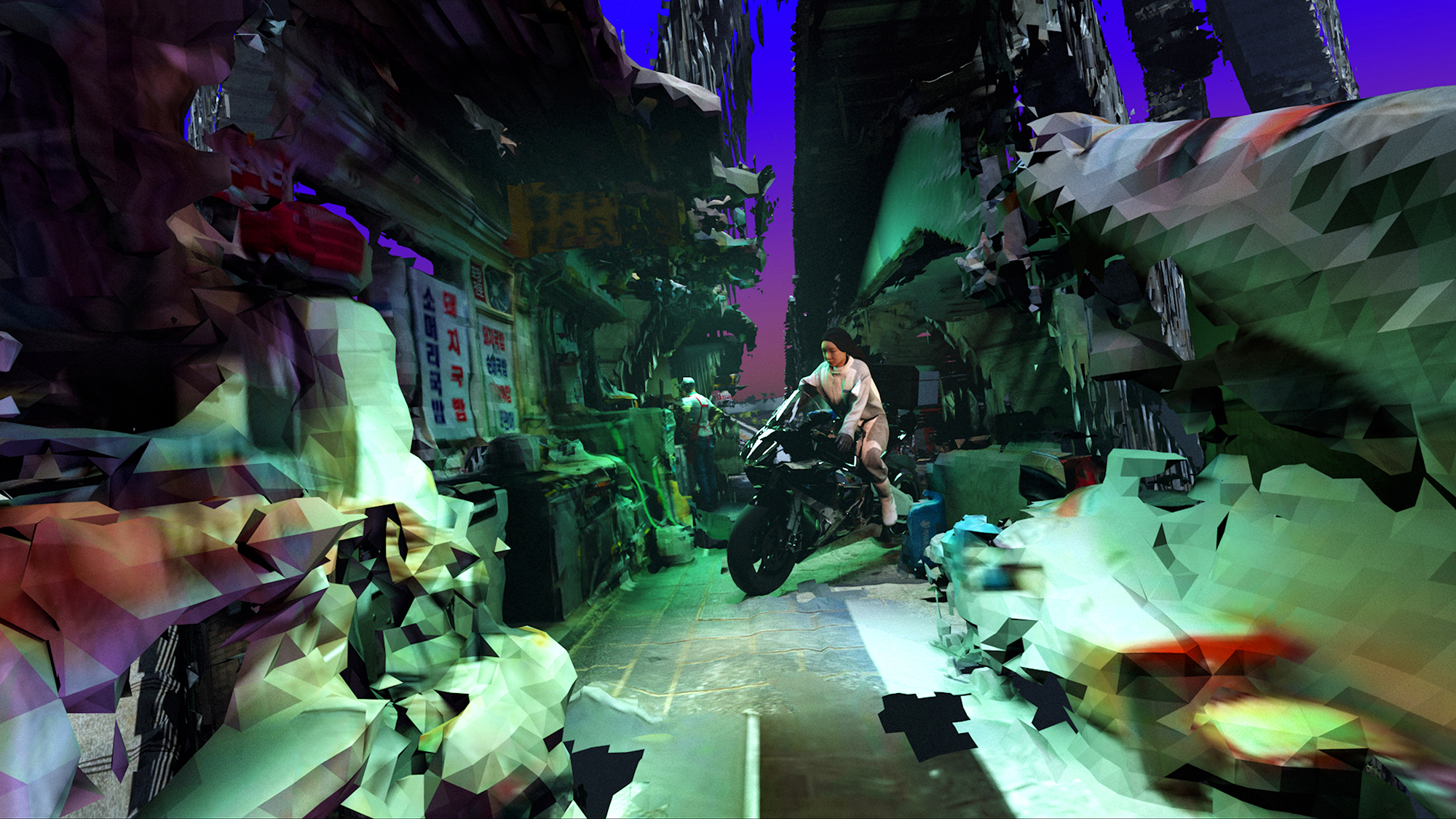
Ayoung Kim, a Korean artist, is one of the hottest properties worldwide right now, after consecutively winning the LG Guggenheim Award and the ACC Future Prize. One of her signature works, Delivery Dancer’s Arc: Inverse, is a three-channel video installation that utilizes cutting-edge technologies such as AI, CGI, and game engines. It continues the story of two female delivery workers, Ernst Mo and En Storm (anagrams of “monster”), first introduced in Delivery Dancer’s Sphere. In that prequel, the love-hate narrative of the couriers (dubbed ‘delivery dancers’, insinuating the inevitable post-Fordist merger of labour and leisure) unfolds in a quasi-fictional Seoul, which Kim scrupulously crafts by merging actual footage of the city with computer-generated imagery to depict the world.
What some might perceive as an invasion into that sacred territory of artistic authorship, for Kim, an avenue through which to incorporate formal and conceptual potentials that are otherwise unobtainable. Yet within that stream of optimism, Kim’s use of technology is full of nuance. For one, the wryly dystopian settings of her latest projects are the direct result of the amplification of neoliberal forces accelerated by the digital revolution. This approach also surfaces in her earlier Zepheth series, where she reconstructs historical narratives of the petroleum industry and labor migration into new performances using computer-generated imagery, 3D modeling, and green screen video.
Kim’s practice moves beyond the common narrative of technology as a threat, instead leveraging it as a medium for imagining alternative futures. Her work is currently on view at Hamburger Bahnhof in Berlin and the Queensland Art Gallery in Brisbane, and will be exhibited at MoMA PS1 in New York this coming November.

Queen of May’s New York Art Week, Ayoung Kim: “My Journey with AI Began in the Distant Past”
Ayoung Kim is a media artist who uses advanced technologies like AI, VR, and motion graphics to build narratives that connect history with contemporary social issues. As the first Korean recipient of the 3 rd LG Guggenheim Award, she is recognized for reimagining the future through deep research into ancient myths and forgotten technologies. Her large-scale video and installation work often highlight marginalized voices, such as female laborers, and blend fiction with real-world observation. Embracing collaboration with AI as part of her creative process, she works under the belief that “the future holds answers in the past,” continually pushing the boundaries between art and technology.